An 11-Piece Kit for the Whole Shaping Cycle
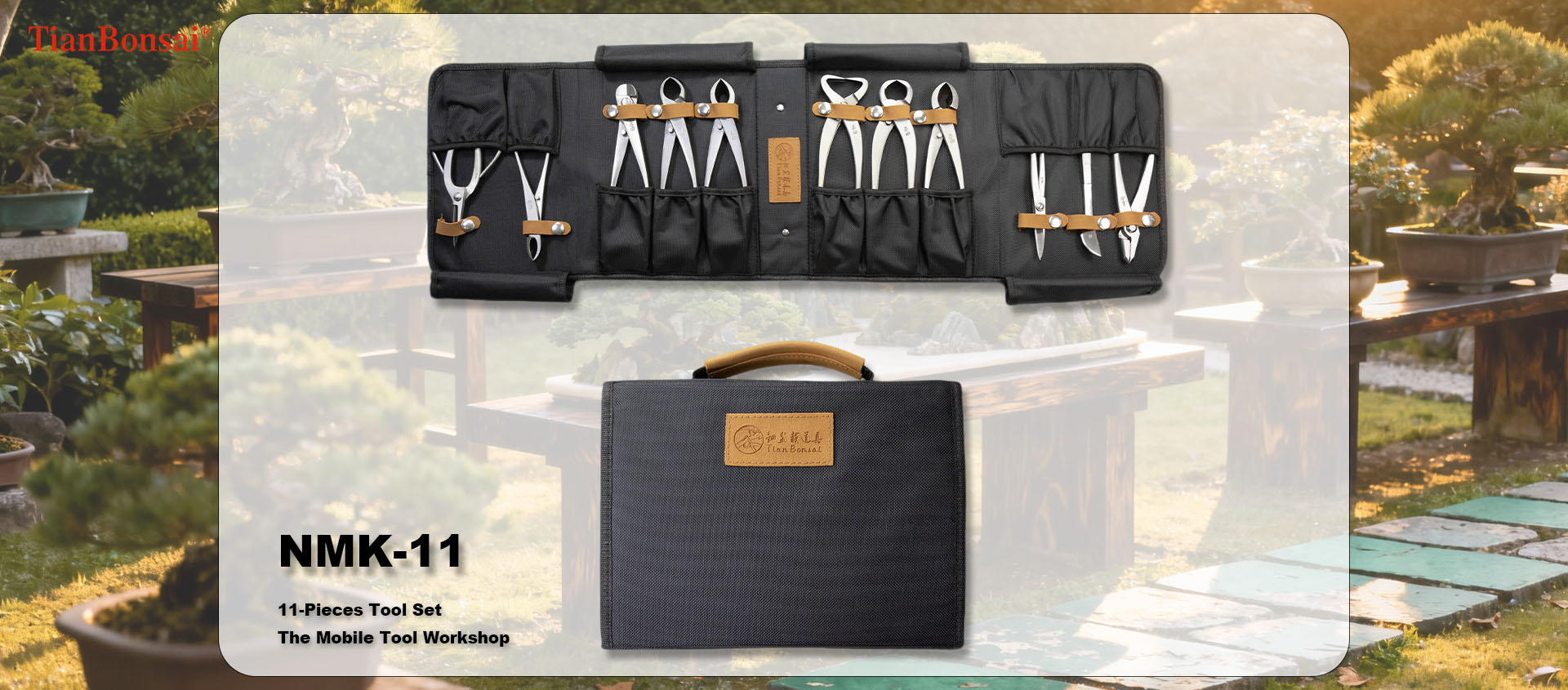
A shaping session goes better when the right cutter is already in your hand, and that is what this professional-grade bonsai tool set is arranged around: eleven pieces that between them cover fine trimming, structural pruning, deadwood work, root reduction and wiring. Instead of buying one tool at a time and hoping the sizes sit well together, you get a matched collection where every piece has a defined job and the handles, joints and edges follow one standard. It suits the grower who works through a rotation of trees over a weekend, and just as well the enthusiast who has been borrowing scissors to get this far. Everything arrives in one box, so a pruning season does not stall because a single cutter is missing.
Why This Set Works as One Kit
- One purchase instead of eleven separate orders — a complete bonsai tool kit for trimming, structural cuts, root work and wire, ready to use as it arrives.
- Sizes chosen for the job — each cutter and pair of pliers is proportioned to the work it does, from narrow detail cuts to heavy structural wood, so the set keeps working as your trees put on weight.
- Made to be used — the edges and joints are built for regular sessions at the bench, not the occasional tidy-up.
- A step up you keep — if you have been working with bonsai tools for beginners, this is the set you move to and stay with; nothing here is a starter tool waiting to be replaced.
Set Contents
| Item |
Specification |
| Model |
NMK-11 |
| Brand |
TianBonsai |
| Product type |
Professional grade bonsai tool set |
| Narrow edge cutter |
185 mm |
| Long handle scissors |
210 mm |
| Root pruning scissors |
190 mm |
| Knob cutter |
205 mm |
| Bonsai branch cutter |
205 mm |
| Round edge cutter |
205 mm |
| Trunk splitter |
205 mm |
| Root cutter |
215 mm |
| Bonsai wire cutters |
205 mm |
| Jin pliers |
205 mm |
| Bonsai tweezers |
210 mm |
Working Through a Tree
- Read the tree first: decide which limbs stay, take the heavy wood out with the branch cutter in single clean bites, and open a deadwood line with the trunk splitter where the trunk needs character.
- Work the roots at repotting: the root pruning scissors and the root cutter trim a dense root ball back to size before it goes into fresh soil.
- Set the line with wire: the jin pliers bend a coil, hold it against the branch and let you work that branch into position.
- Take the wire off again: once the branch has set, the wire cutters lift the aluminium away in short sections instead of dragging it through the bark.
- Finish the detail: buds, needles and the small growth that decides the final silhouette belong to the scissors, the tweezers and the narrow edge cutter — the quiet passing work that keeps your bonsai pruning tools in hand all season.
Handling, Cleaning & Storage
- Treat the edges with respect — every piece here is sharp, so keep your fingers and anyone standing nearby clear of the blade line, and never leave a tool balanced where it can fall.
- Match the cutter to the branch — stay inside the cutting limit for that tool; forcing an edge through heavier wood than it was made for is the quickest way to damage it.
- Skip dry wood and dirty bark — brittle dead branches are hard on any edge, and grit or dried soil on the bark will roll the edge of bonsai pruning tools, so brush the surface clean before you cut and keep cutting tips away from knocks.
- Clean up after every session — rinse sap and grit off with clean water, wipe the metal dry with a soft cloth and let it air for a few minutes.
- Oil the pivot — a small drop of general anti-rust oil on the rivet of each cutter and pair of pliers, then wipe away any excess so it does not collect dust.
- Store indoors — keep the bonsai tree tools out of damp sheds and open weather, and check the edges before the next session.
Who This Set Suits
Four kinds of buyer get the most from this bonsai tool set. The grower who has been making do with one blunt cutter and a borrowed pair of scissors wants a single kit that covers trimming, structural cuts and root work without a second order. The enthusiast moving up from a starter pair wants edges and joints that stay accurate as their trees put on age and weight. The working artist trimming a client's tree, running a workshop or teaching a class needs the whole spread of cutters together in one case. And the person buying for a bonsai grower wants something that will be used every season rather than admired once.
Scale & Supply Capability
TianBonsai is a bonsai-tool brand with a focused, deep range: carving knives and gravers, bud scissors, branch cutters, wire cutters, multi-piece tool sets, and the cases and roll bags that carry them. Across the series we work in specified alloy steels — 4Cr13MoV, 5Cr15MoV and Mn18Cr2 — with high-frequency quenching, forged edges, right- and left-handed options, and patent-design storage. Ordering from us means one consistent standard of forging, hardening and finishing, and a range that grows with your practice.
Precautions for the use of bonsai tools:
1. Our tools have very sharp blades. Please pay attention to the safety of users and nearby personnel when using it. Do not arbitrarily place tools on high places. If the tool is accidentally dropped, it may cause injury to personnel and tools.
2. Choose a bonsai tool of the right size. When pruning, the diameter of the branches should not exceed the cutting limit specified by the cutter, otherwise the cutter will be easily damaged.
3. Don't use bonsai tools to trim dry branches, otherwise it is easy to damage the tool blades.
4. The fine sand particles in the flower mud will damage the blade of the tool, so when using a bonsai tool to trim branches, pay attention to whether there is dirt on the branches. If there is dirt on the branches, clean them with a small brush before pruning.
5. Pay attention to protect the tool tip, even a slight frontal collision will cause damage to the tool tip.
6. Please maintain the tools after the work is completed.
Precautions for cleaning and maintenance of bonsai cutter and scissors:
1. After the work is completed, clean the sawdust and flower mud on the surface of the tool with clean water.
2. Wipe off water stains with a clean cloth and wait for it to dry.
3. Use a small amount of general anti-rust oil to drop on the tool riveting shaft.
4. Wipe off the leaking anti-rust oil with a clean cloth.
5. Store tools indoors.
FAQ
Q1. Does the set come with a case?
Yes. This bonsai tool kit arrives in its own case, made from high-density waterproof Oxford fabric with a slot for each of the eleven pieces so the edges stay apart in transit and between sessions. Kept indoors, the case turns the set into something you can carry to a workshop, a nursery visit or a client's garden.
Q2. Can someone new to bonsai get good results with this set?
Yes. The scissors, tweezers and narrow edge cutter are light in the hand and easy to control on a first tree, while the larger cutters reward the confidence that comes with practice. Anyone who has been making do with bonsai tools for beginners will find the step up here is about control, not complexity.
Q3. How thick a branch can these tools cut?
There is no single figure for the whole set — each piece has its own cutting limit, which is why the cutters come in a spread of sizes. Work to the limit of the tool in your hand and step up to a larger cutter as the wood gets thicker. The bigger bonsai tree tools — branch cutter, trunk splitter and root cutter — are the ones for structural limbs.
Q4. Will the wire cutters damage the branch when I take wire off?
No. The working part of the bonsai wire cutters is extended so you can reach under a coil and cut without pressing the blade against the bark. Work in short sections along the coil and lift each piece away rather than pulling the wire through the branch. These cutters are kept for wire only, never for wood.
Q5. What is the difference between the branch cutter and the round edge cutter?
The bonsai branch cutter has a straight edge for clean cuts on live branches, leaving a flat wound where a limb is removed. The round edge cutter has a curved edge and is used where the cut sits closer to the trunk surface, so the tree can close over it as it grows. Keep the branch cutter for structure and reach for the round edge cutter on cuts that will be seen.
Q6. Should I buy the complete set or just the pieces I need?
If you already own a few good cutters, buying single pieces works well — just check that the sizes sit with the tools you use now. Choose the full set when you are building a collection from scratch or replacing a drawer of worn and borrowed pieces. Many buyers who go looking for bonsai tools for sale start here, because one order covers trimming, structure, roots and wire.


